
Why Some Phrases Survive and Others Disappear
Why Some Phrases Are Set in Stone, and Others Fade Away
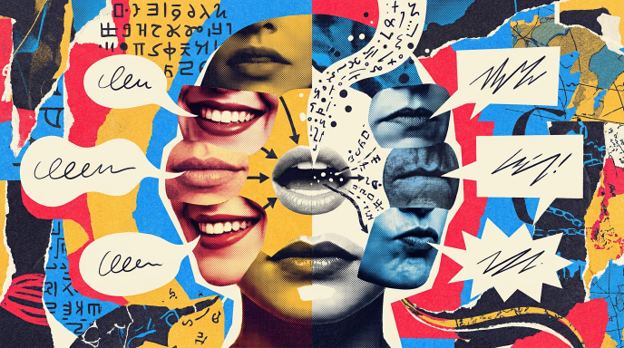 speech bubbles, handwritten symbols, and fragments of text”>
Every Saturday morning, my mother and I walked to the same corner bakery. Mrs. K, as the neighborhood called her, had an opinion about everything and a phrase for all of it. One morning she spotted the stuffed bear I’d dragged along and didn’t hesitate: “Oh honey, that bear is just the bee’s knees.”
The walk home was, by my mother’s account, among the most exhausting of her life. Did bees have knees? Were bear’s knees involved? Was this a compliment? A warning? It took three blocks to explain that it just meant wonderful.
The bee’s knees hummed through the 1920s, and then people just stopped saying it. By the time I met Mrs. K, she was probably the last person in New York still using it. Or at least the last person I ever heard say it.
Not every phrase gets staying power. For every expression that survives its original speakers, many more fade into the linguistic ether. So what makes one phrase stick while another fades away?
A Field Guide to Phrase Survivors
Some linguistic survivors have been around long enough to see off entire generations of speakers. Others first appeared on a movie set or in a chat window. A few start out as punchlines, get written off as slang for years, and then one day show up in the dictionary looking suspiciously respectable. Some carry a spiritual weight that keeps people coming back, whether they’re reading up on old sayings or talking one through with an advisor on Nebula.
Idioms: Frozen in Time
A 2021 study published in the Quarterly Journal of Experimental Psychology found that when we read a familiar idiom, the brain holds back the meanings of the individual words and goes straight to the meaning of the whole expression. That’s why kick the bucket registers as “to die,” and nobody pictures a foot and a pail.
That’s one reason some idioms are so stubbornly hard to kill. They can even keep old words alive long after they’ve dropped out of everyday speech. Etymologist Jess Zafarris calls these fossil words.
With bated breath: “Bated” comes from bate, an 800-year-old Middle English shortening of abate, meaning to suppress or diminish. You’ll rarely see it outside this phrase, which is why so many people spell it baited.
Without further ado: “Ado” is a Middle English word from the 1200s meaning “fuss” or “bustle.” These days you’ll hear it almost nowhere else, apart from Shakespeare’s Much Ado About Nothing.
Proverbs and Sententiae: Ancient Wisdom
A proverb is anonymous and street-level—every cloud has a silver lining, author unknown, circulating since the 1800s. A sententia started as one person’s line and escaped into common speech. Cato the Censor wrote animus in consulendo liber (in discussion a free mind) in the second century BC. By the medieval period, people carved it onto town hall facades across northern Italy. Today it is NATO’s official motto.
Hernadi and Steen in their 1999 study linked the staying power of proverbs to rhythm, alliteration, rhyme, and simple syntax. These features make them easy to store and recall. They also found that people reach for proverbs when facing a difficult choice: invoking one borrows the weight of collective experience.
Phrases like “dark night of the soul” or “leap of faith” are still in use centuries later. They name experiences that are hard to put into words otherwise, what many would recognize as spiritual meanings and symbolism. People actively seek meaning on spiritual platforms, where questions about inner experience are exactly the point.
Memes and the Grammar of Going Viral
Linguists Barbara Dancygier and Lieven Vandelanotte describe memes as having their own emerging grammar: familiar formats can be reused with new words, new situations, and even new images. Take “One does not simply…” from The Lord of the Rings. The sentence began as Boromir’s line about entering Mordor in the 2001 film The Fellowship of the Ring. Online, it became a template for everything people supposedly cannot do easily.
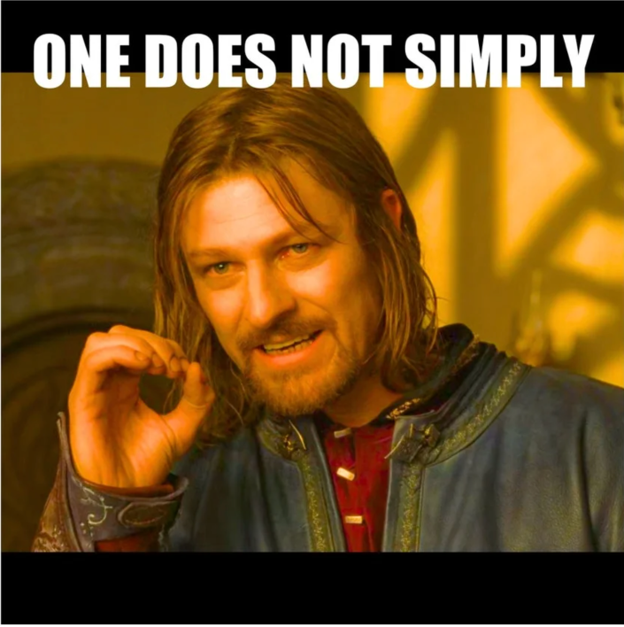
Memes depend on shared context: people have to recognize the image, the joke, or the original situation. When that context is lost, the phrase might become confusing or stop being funny. The ones that last are the ones you can bend to fit just about anything: disbelief, embarrassment, triumph, and plenty in between.
Internet Slang That Graduated to the Dictionary
Ghosting. FOMO. Selfie. All three filled what lexicographers call a lexical gap: they named something that previously had to be described with a full sentence. Ghosting is replaced when someone stops responding, and you never hear from them again. Selfie saved everyone from saying a photo I took of myself on my phone.
Editors are clear on the criteria: a word earns its entry through sustained use across time and contexts. Lexicographers track how consistently a word appears across different kinds of writing and communication.
And what makes a word appear consistently enough to earn that staying power, especially outside of online spaces? Usually, it names something that was already happening but took a whole sentence to explain.
What Makes a Phrase Set in Stone
Across idioms, proverbs, memes, and internet slang, the phrases that last check at least one of these boxes.
- Sound and form. Rhythm, rhyme, alliteration, and short sentences make a phrase easier to remember and bring to mind. Hernadi and Steen linked these features to the memorability of proverbs.
- Analogy across domains. A vivid comparison. Break the ice links two different worlds. It means helping strangers feel at ease with each other, and the image of cracking frozen water makes that abstract idea easy to picture.
- Cognitive shortcut and social permission. A shortcut with backup. A familiar phrase can package a complicated thought into something instantly recognizable. A proverb can also lend the weight of shared experience to an opinion or decision, much like talking a choice through with a psychic on Nebula.
- Lexical gap. Some new words stick because they give a concise name to something people already need to talk about. Selfie and ghosting are good examples.
- Universal experience, no cultural expiry date. Expressions survive longer when they describe experiences that remain familiar even as the world around them changes.
